Showing posts with label Indian. Show all posts

Tuesday, July 17, 2012

An Indian-Inspired Feast

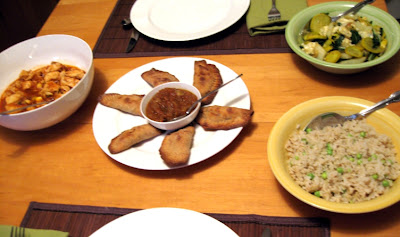
After seeing "The Best Exotic Marigold Hotel" (excellent film), I knew Indian food was in our near future. I could practically smell everything they were eating through the screen. While the theater was just a few blocks from one of our favorite Indian restaurants, I knew we could eat more healthily at home and still be satisfied. I missed having roti (whole wheat flat bread, similar to naan) as part of the meal, but that was a little more starch than I should be eating in one sitting with samosas and rice, so I left it out this time.

On the menu:


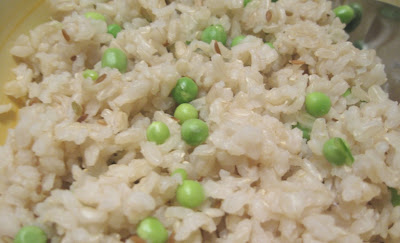
The rice was easy and straight forward. I was out of brown basmati rice, so went with regular brown long grain (sprouted, if you have it). I mixed in some cumin seeds in with the rice (approx. 2 tsp. per cup of dry rice) and steamed in my rice cooker. Once done, I mixed with some freshly-shelled peas (you can save the pods for another dish). If using frozen peas, you could add them before cooking. I would just skip the peas in that case, but you may feel differently. The cumin seeds add a wonderful fragrance.

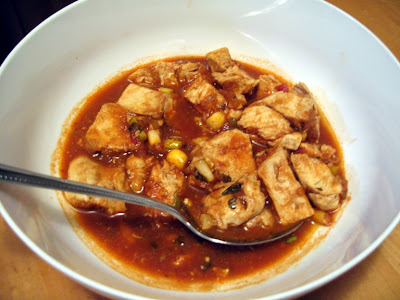
The chicken tikka masala was the only real "cheater" dish. I would have made my own sauce, but I've had a jar of Trader Joe's Masala Simmering Sauce in our pantry for a while and was curious to try it. I was doing enough that I figured jarred sauce was justified. It tasted pretty good. For nights when I want to throw something together quickly, I may use it again (though the nearest Trader Joe's is hours away). I like that they don't add a bunch of unnecessary, unpronounceable ingredients. The only thing I added aside from chicken, the sauce & water (the sauce is concentrated) is some sliced scallions (white and light green only). The sauce is very easy to make, though. Google for recipes, if desired (I kind of wing it and haven't paid much attention to proportions of ingredients... next time I'll make a note of it as I'm doing it).

Here's a little trick: If the sauce is too thin, a little pumpkin or other winter squash puree is a great way to thicken without adding oodles of cream or fat. I usually keep a can of pumpkin puree (not pie filling) on-hand, just for those situations. And you then have an excuse to make muffins out of the remaining puree (mmm...).

One of my only complaints about this dish in restaurants is that the chicken is often dry. It seems an insult to the lovely, velvety, sweet/savory sauce it usually accompanies. Prolonged cooking can kill white meat chicken. Fast cooking can also do the same, if you're not careful. The muscle tenses with harsh heat and, in that process, can squeeze the moisture right out.

One tip for getting the most moist chicken breast you've encountered... poach it! This is especially gentle if using boneless, skinless breasts. I pulled the skin off, then de-boned the breast and used the bones for added flavor in the poaching liquid. Fill a pot with cool water, add aromatics & spices (I used an onion, a few sprigs of thyme and tarragon, along with a cinnamon stick, cardamom pods, salt, pepper) and bring the water until just below a simmer (approx. 170 F, poaching is between 160 F & 180 F). Once the water is up to temp, add the chicken breast (whole). Check with an instant read thermometer after 15 minutes. Remove from heat when the internal temp reaches 160 F. It will come up to 165 F while resting. Let rest for at least 10 minutes before cutting. Cube and add to the preheated sauce just to warm everything through.

The gulab jamun (one of my most favorite desserts on the planet) was good, but not great. The flavor was spot on, but the texture and leavening was slightly off. This was my first time making it, so I'd like to make a few more tweaks before posting the recipe.

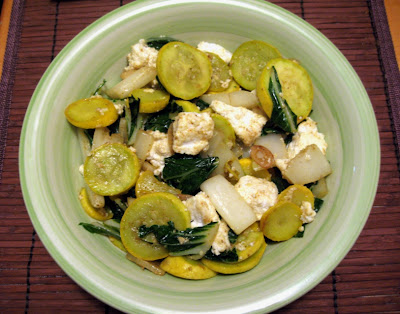
Summer Squash and Bok Choy Paneer


I love palak/saag paneer. I've gotten various answers from a few Indian friends as to the difference between saag and palak. Both tend to mean spinach in the restaurants I've frequented, but one friend said that one was actually mustard greens (I forget which). Another said that one is creamy (think creamed spinach) and the other isn't, but restaurants don't seem to keep consistent to that distinction, either. I prefer non-creamy, whatever the vegetable.

This version doesn't contain either spinach or mustard greens, but it's somewhat of a tribute. Much like the samosas I made for the same meal, this is also an excellent opportunity to use whatever vegetables you may have that sound good, ending with a wonderfully tasty vegetable dish. Case in point-- I was planning on just using kale, but when I went to dig it out of the veggie drawer, I found it had gone south on me. In a 3-second re-think, I grabbed the bok choy and summer squash instead. Oh, and it's an excuse to make cheese. That's hardly a negative in this house. I loved the silkier mouth feel of the freshly-pressed paneer, for a perfect mixture of textures. Don't panic when the cheese doesn't melt. It's not supposed to.

I have no idea how to say "bok choy" or "summer squash" in Hindi, but however it's translated, it's also yummy and light. The fresh cheese brings an indulgent feeling to the table, without actually being overly decadent.

Ingredients:
  • 1 Tbl. olive oil
  • 2 summer squash, sliced into 1/4" slices
  • 3 leaves/stalks of mature bok choy (or one head of baby bok choy), roughly chopped, white stalk and greens separated.
  • 2 cloves garlic, sliced thinly
  • salt, to taste
  • cayenne, to taste (optional)
  • *garam masala 
  • **paneer from 1 half gallon milk, cubed (If buying this, approx 6-8 oz.)
1. Heat the oil in a hot skillet
2. Toast oil for just a few seconds (3-5), until just starting to turn golden (careful, if it burns, you'll be starting over) and remove from the pan.
3. Add squash, the whites of the bok choy & a pinch of salt and sautee until you start to see their moisture escaping into the pan, stirring frequently
4. Add bok choy greens & paneer and stir every few seconds to ensure everything cooks evenly and the greens are just soft, but not overcooked
5. Adjust seasonings, as needed

* Garam Masala: (Which essentially just means a blend of dry spices. There is no, single garam masala mixture. This is approx. what I used, but you could substitute/adjust as you see fit or add a curry powder you particularly like)

  • 5 cloves, milled in a spice grinder or crushed w/ a mortar and pestle
  • 1/2 tsp cumin seeds, milled or crushed
  • 1/2 tsp coriander seeds, milled or crushed
  • 1 bay leaf (removed before filling)
  • 1/2 tsp. freshly ground black pepper
  • 1/4 tsp. cinnamon
Note: Where using whole spices, lightly toast in a hot skillet before grinding, to release their oils.

**Paneer:

The method for paneer is very similar to making goat cheese, going one step further. Once the cheese is made, it's pressed, like you would press tofu.
  • 1/2 gallon milk (I used 1%, but you could use anything from full fat to nonfat)
  • 1 tsp. citric acid powder (you could use approx. 1/4c lemon or lime juice, adding more if necessary to break the curds from whey)
  • 3 quart sauce pan/pot (nonreactive)
  • Candy thermometer or probe thermometer with clip
  • a clean tea towel or butter muslin
  • strainer
  • something to use as a weight to press cheese (I used a small canister, similar in size to the strainer)
1. Pour milk into the pot and slowly bring up to 190 F, stirring occasionally to ensure the milk isn't scalding on the bottom of the pot.

2. Add citric acid (or lemon/lime) and wait a few seconds to curdle. This will be fine curds (like goat cheese). If you don't see curds after a minute, add a small amount more of acid (1/8 tsp. powder or 1 tsp. juice).

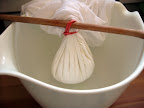
3. Strain in strainer or colander lined with tea towel or butter muslin, gather the muslin and tie to a wooden spoon to drain for approx. 30 minutes.

4. Cover with the other half of the towel and place a weight on top and press for 30-60 minutes.
5. Remove the weight, place in a covered container and refrigerate until use.

Baked Root Vegetable Samosas With Grapefruit Chutney

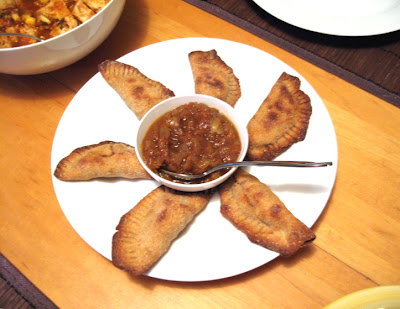
Rather than frying the samosas, I bake them. This dough still yields a nice balance of crispy and chewey crust.

The filling falls in the category of "I have a bunch of veggies to use and these sound good". I sometimes do the more traditional potato & peas filling, adding carrot for a bit of sweetness. Since I don't really care for either potatoes or peas (unless they're straight from the pod, and those went in the rice), however, I often seek out different fillings. Since we had turnips that needed to be used, I figured they were a great substitute for potato. I left in my usual standby of carrot. One of the beauties of these little pastries is that the filling can be pretty much whatever you want. You could even do a dessert version with fruit!

You should serve with some sort of complementing sauce(s). This time I served them with some grapefruit chutney (recipe below), but there are endless sauces you can use. One of my favorites is seasoning pumpkin butter with warm spices (cardomom, cumin, etc) and apple cider vinegar.

The rolling and assembly of the samosas was courtesy of my husband and favorite sous chef :-)

Samosas - Yields approx. 1 dozen samosas.

Pastry: (adapted from Mollie Katzen's "Moosewood")
  • 2 c whole wheat pastry flour, plus more for kneeding
  • 1 c plain yogurt (If greek, add 1 Tbl. of water)
  • 1 large pinch of salt
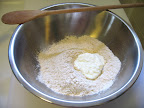
Mix all ingredients in a bowl. Knead for a few minutes (between 3-5 min.). You don't want to over work the dough, but you do want to develop enough gluten so that it's strong enough to hold the filling. Once this is done, cover with a damp towel and set aside to rest while you make the filling (if longer than an hour, put it in a baggie and into the fridge- this can be done even a few days ahead).


Filling: (I vary the filling frequently. You need approx. 3 c of chopped raw vegetables-- more if they lose a lot of moisture while cooking)
  • 3 small pink turnips (one large turnip would do), skin-on, scrubbed and diced
  • 2 carrots, peeled and diced
  • 1 Tbl. olive oil
  • 1 tsp. mustard seeds
  • 1 tsp. cumin seeds, crushed
  • salt, to taste
Keep in mind that you want to have your vegetables all cooked to your desired doneness at the same time. It's okay to start cooking the hardier vegetables for a few minutes and then add those that will be done more quickly. I actually like that in this particular combination the carrots take longer than the turnips. I started them at the same time on purpose, so that the turnips with be nice and soft while the carrots were tender, but still had some body to them. The combination of textures were great!

Heat the oil in a hot skillet and add the vegetables, in stages, if necessary. Add a pinch of salt, the mustard seeds. As the vegetables soften, season to taste.

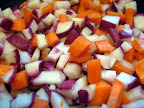
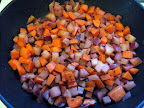
Filling, before & after

Let the filling cool before assembling.

Assembly: (at this point, preheat your oven to 425 F)

  • Divide dough into approx. 1" balls
  • Flour your workspace and roll into approx. 5" circles
  • Place approx. 1 1/2 Tbl. of filling (better to slightly under-fill than over-fill)
  • Fold in half around the filling and crimp edges with a fork, along the semicircle
Baking:
  • Place on an oiled baking sheet (I used an olive oil mister)
  • If you have a mister with olive oil, spray the tops of the pastries, as well
  • Bake for 15 minutes
  • Turn over and reduce oven to 375 F
  • Bake another 7-10 minutes, until brown
Grapefruit chutney
  • 1 large ruby red grapefruit
  • 1/2 onion (I used a small, whole spring onion)
  • 2 Tbl. apple cider vinegar
  • 1 Tbl. brown sugar, or equivalent (I used a brown xylitol/stevia blend)
  • 1 tsp. cardomom
  • 1/2 tsp. cumin
  •  a few grinds of black pepper
  • 1 pinch cayenne (optional)
  • salt, to taste
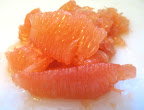
Using a sharp knife, peel the grapefruit, taking care to remove and discard all of the bitter white pith. Section the grapefruit out of its membrane and cut into chunks (they will break down as they cook), removing any seeds. If you are a whole-foods eater like me, finely mince the membrane and add with the fruit. It does add a small amount of bitterness, but the rest of the flavors mellow that component. If you have a cutting board with a little reservoir, use it to capture any juices and pour them into the pot, as well.


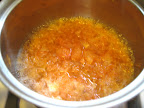
Saute onion in a small amount of water to soften, then add grapefruit (or, if you're like me, do the onions separately because you initially forgot them until the first taste, haha). As it's about half way softened, add vinegar and approx. 1/2 c. water. Let simmer slowly until reduced approximately by half (approx 30 minutes), stirring every 5-10 minutes. Add seasonings slowly and adjust where necessary. It should be like a loose jam. Let it cool to room temp before using.